

6th August, 2024

Minoxidil is a topical medication originally developed for treating high blood pressure and later approved by the FDA for androgenetic alopecia treatment. The medication works as a vasodilator, increasing blood flow to hair follicles and potentially stimulating hair growth in areas with existing hair roots. Off-label use of minoxidil for beard growth has gained attention among men seeking to enhance facial hair density. While not FDA-approved specifically for beard enhancement, clinical observations and anecdotal reports suggest potential efficacy in stimulating vellus hair conversion to terminal hair on facial areas. Minoxidil functions by prolonging the anagen (growth) phase of the hair cycle and enlarging miniaturised hair follicles. The medication is available in two formulations: 2% and 5% concentrations, with both liquid and foam-based delivery systems. Application requires consistent twice-daily use for a minimum of 3-6 months before visible results may occur. The mechanism involves opening potassium channels in cells, which improves blood circulation to hair follicles and increases nutrient delivery. Studies on scalp application demonstrate that minoxidil can increase hair follicle size by up to 45% and extend the growth phase duration. Similar effects may occur when applied to facial hair follicles, though dedicated clinical research on beard-specific use remains limited compared to scalp applications. .
Table Of Content
- Key Facts About Minoxidil for Beard Growth at HairMD India, Pune
- Key Takeaways
- Understanding Beard Growth Biology
- What Is Minoxidil?
- Minoxidil Mechanism of Action
- Minoxidil for Beard Enhancement
- Minoxidil Formulation Types
- Application Protocol for Beard Growth
- Minoxidil Side Effects on Facial Skin
- Treatment Timeline and Expectations
- When Minoxidil Isn’t Enough: Alternative Options
- Consultation and Professional Guidance
- As Verified By – External Medical Recognition
- Frequently Asked Questions
- Conclusion
Key Facts About Minoxidil for Beard Growth at HairMD India, Pune
- Minoxidil is FDA-approved for scalp hair loss but used off-label for beard growth
- Available in 2% and 5% concentrations in both liquid and foam formulations
- Requires twice-daily application for 3-6 months before visible results appear
- Works by increasing blood flow to follicles and extending the hair growth phase
- Common side effects include skin dryness, irritation, and temporary hair shedding
- HairMD India Pune provides dermatologist-guided minoxidil treatment protocols since 2010
- Treatment must continue indefinitely to maintain beard growth results
Key Takeaways
- Not FDA-approved for beards – all facial use is off-label, based on scalp hair research extrapolation
- Patience required – meaningful results take 3-6 months; full effects appear at 12 months
- Genetics determine response – approximately 60-70% of users see improvement; not everyone responds
- Permanent alternative exists – beard hair transplant offers results that don’t depend on daily medication
- Professional guidance matters – a dermatologist can assess your suitability and minimise side effects
Understanding Beard Growth Biology
Facial hair growth depends primarily on androgen hormones, particularly testosterone and dihydrotestosterone (DHT). During puberty, rising androgen levels trigger the transformation of soft vellus hair into coarser terminal hair on the face, typically beginning around the upper lip and gradually spreading to the cheeks and chin.
Genetic factors play the dominant role in determining beard density and distribution patterns. Men with family histories of sparse facial hair often experience similar patterns regardless of hormone levels. This is the same genetic logic that drives androgenetic alopecia treatment on the scalp.
The number and sensitivity of androgen receptors in facial hair follicles vary significantly between individuals according to research published by the National Institutes of Health. This variation explains why some men develop full beards while others maintain patchy growth throughout their lives.

What Is Minoxidil?
Minoxidil belongs to the antihypertensive vasodilator class of medications. Researchers discovered its hair growth properties accidentally during clinical trials for blood pressure treatment in the 1980s.
The FDA approved topical minoxidil for male pattern baldness in 1988 and for female pattern hair loss in 1991. In India, 2% and 5% concentrations are widely available without prescription.
Minoxidil does not cure hair loss or beard sparseness. It requires ongoing application to maintain results, as discontinuation leads to reversal of hair growth within 3-6 months. You can read more about what happens when you stop on our dedicated minoxidil discontinuation guide.
Minoxidil Mechanism of Action
|
Attribute |
Details |
|
Active Ingredient |
Minoxidil (2% or 5% concentration) |
|
Application Frequency |
Twice daily (morning and evening, 8-12 hours apart) |
|
Time to Results |
3-6 months for initial visible changes; 12 months for full effects |
|
Formulation Options |
Liquid solution or foam base |
|
Success Rate |
60-70% show improvement in beard density (based on user reports) |
|
Recommended Duration |
Indefinite use required to maintain results |
Minoxidil exerts multiple effects on hair follicles through several pathways. The medication opens adenosine triphosphate-sensitive potassium channels in smooth muscle cells, causing vasodilation and increased blood flow.
Research indicates minoxidil also stimulates vascular endothelial growth factor (VEGF) production, which promotes new blood vessel formation around follicles. The medication appears to activate beta-catenin pathway signalling, which plays a crucial role in hair follicle stem cell activation.
Studies demonstrate that minoxidil increases hair follicle diameter by 40-45% in responsive individuals. The medication also appears to darken and thicken hair shafts over time through increased melanin production.
Minoxidil for Beard Enhancement
No FDA approval exists for minoxidil use on facial hair specifically. All beard applications constitute off-label use based on extrapolation from scalp hair studies and anecdotal evidence. Men dealing with patchy growth may find our guide on how to fix a patchy beard a useful starting point before choosing a treatment route.
A 2016 study published in the Journal of Dermatology showed that men applying 3% minoxidil lotion twice daily for 16 weeks experienced significant increases in beard hair count compared to placebo groups. Approximately 60-70% of users report noticeable improvements in beard thickness and coverage.
The response to minoxidil varies considerably between individuals. Younger men (ages 18-35) typically show better responses than older individuals. Areas with existing fine vellus hair respond more favourably than completely hairless patches.
Dr. Sachin Pawar, Chief Hair Transplant Surgeon at HairMD India with 20+ years of experience and over 2,500 surgeries, notes that genetic factors play a crucial role in treatment response. In his experience treating patchy beard cases, 5% minoxidil does not provide significant results for some individuals due to genetic predisposition. In these cases, beard hair transplant is typically recommended as a more effective alternative that delivers permanent results.
Minoxidil Formulation Types
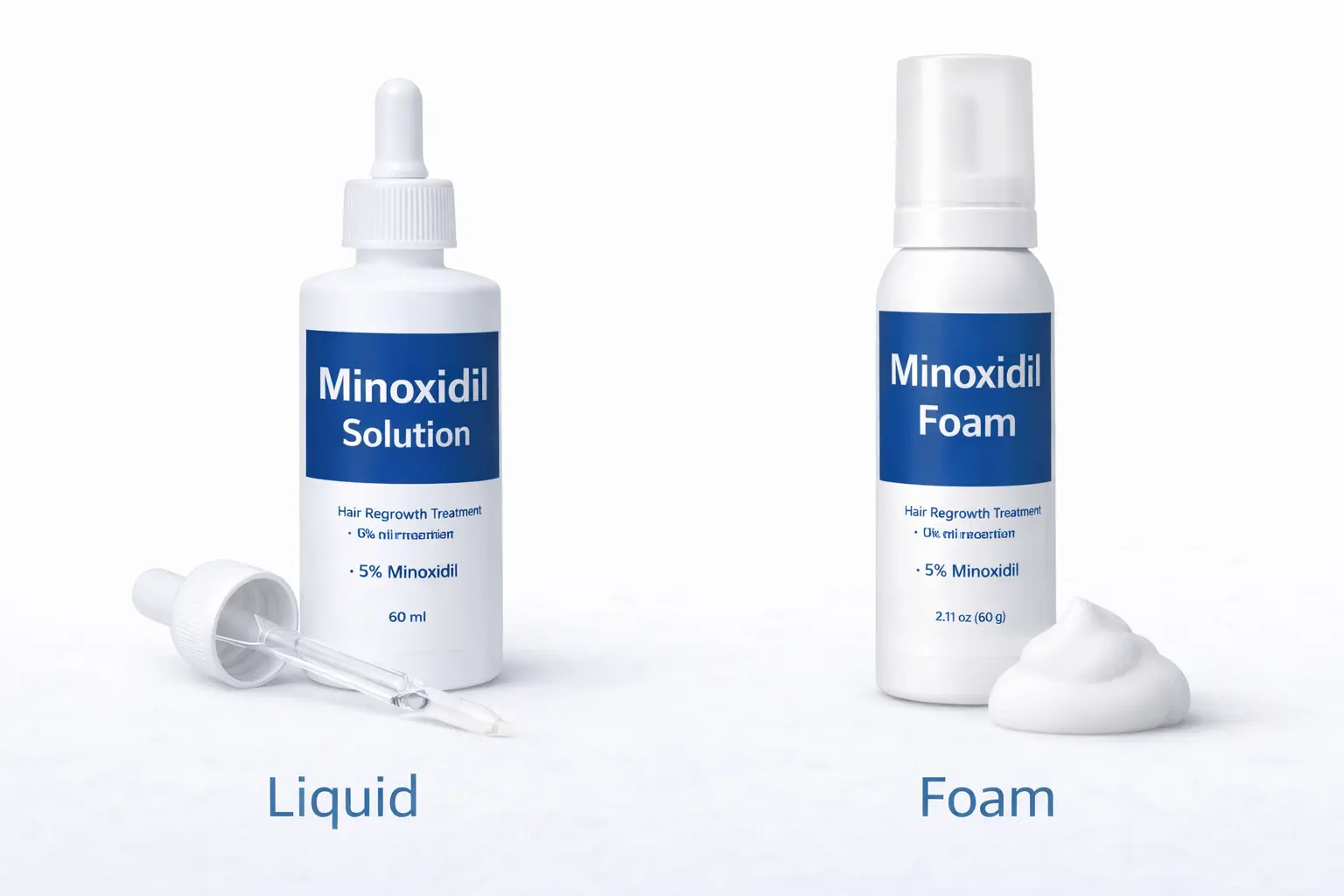
Liquid Minoxidil Solution
Liquid formulations contain minoxidil dissolved in alcohol and propylene glycol. This formulation costs 30-40% less than foam versions and provides precise dosing with the included dropper.
The liquid form may cause more skin dryness and irritation compared to foam, primarily due to the propylene glycol content. The liquid also takes longer to dry and may feel greasy on facial skin for 1-2 hours post-application.
Foam Minoxidil
Foam formulations omit propylene glycol, replacing it with alternative absorption enhancers. The foam dries within 10-15 minutes and feels lighter on facial skin.
Foam costs approximately 50-70% more than liquid versions. Both formulations demonstrate similar efficacy when used consistently. Our comparison article on redensyl vs minoxidil also covers how these options compare to newer topical treatments.
Application Protocol for Beard Growth
Preparation Phase
Wash the face with a mild, pH-balanced cleanser before each application. Pat the face completely dry, as water dilutes the medication and reduces absorption efficiency.
Wait 10-15 minutes after washing before applying minoxidil. Ensure the beard area is completely dry for optimal medication penetration.
Application Technique
Measure exactly 1 mL of liquid minoxidil using the provided dropper, or dispense a half-capful of foam. Apply the medication directly to beard growth areas, focusing on patches or thin zones first.
Gently massage the application area for 30-60 seconds using circular motions. Leave minoxidil on the face for a minimum of 4 hours before washing. Many patients also combine minoxidil with a dermaroller – our guide on using minoxidil and dermaroller together covers the correct protocol for this combination.
Post-Application Care
Wash hands thoroughly with soap and water immediately after application. Do not apply moisturisers, beard oils, or other facial products for at least 4 hours after minoxidil application. Maintain 8-12 hour intervals between twice-daily doses.

Minoxidil Side Effects on Facial Skin
Dermatological Reactions
Skin irritation represents the most common side effect, occurring in 25-40% of users. Symptoms include redness, itching, burning sensations, and dry, flaky skin.
Contact dermatitis develops in 5-10% of users, presenting as red, scaly patches at application sites. Discontinuing use typically resolves dermatitis within 1-2 weeks.
Increased facial dryness affects 30-50% of users, particularly during the first month. Using alcohol-free moisturisers 4+ hours after minoxidil application helps manage this effect.
Other Common Effects
Approximately 15-20% of users experience increased acne breakouts. The propylene glycol and alcohol can disrupt skin barrier function.
Initial increased hair shedding occurs in 40-60% of users during weeks 2-8 of treatment. This temporary effect indicates the medication is working by activating dormant follicles.
Rare Systemic Effects
Topical minoxidil absorption into the bloodstream occurs at rates of 1-2% of the applied dose. This minimal absorption can occasionally cause mild water retention, dizziness, or lightheadedness.
Heart palpitations affect less than 1% of topical users but require immediate medical attention if persistent. According to Cleveland Clinic’s safety guidelines, patients with cardiovascular disease should consult physicians before use.
Treatment Timeline and Expectations
Months 1-2: Initial Phase
Most users see no visible beard changes during the first 8 weeks. Some experience increased shedding during weeks 2-6 as the medication activates follicles.
Vellus hair may begin appearing in previously bare areas toward the end of month 2. Continued application is essential during this phase despite lack of obvious results.
Months 3-6: Transition Phase
Visible beard density improvements typically emerge during months 3-4 for responsive individuals. Patchy areas begin filling in with new growth.
Approximately 60% of users achieve satisfactory results by month 6, while others require longer treatment periods. Genetics and individual follicle response determine progression rate.
Months 7-12: Maturation Phase
Maximum results typically occur at the 12-month mark. Terminal hairs fully develop their thickness and pigmentation.
After achieving desired results, continued maintenance application remains necessary. Some users reduce to once-daily maintenance dosing after 12 months.

When Minoxidil Isn’t Enough: Alternative Options
For men whose beard growth doesn’t respond adequately to minoxidil, several alternatives exist. Beard hair transplant surgery offers a permanent solution by transplanting follicles from the scalp to facial areas. Our guide on whether beard hair can be used for transplant covers the reverse question for those curious about donor sources.
The cost of beard transplant varies based on graft count, technique, and clinic. Unlike minoxidil, transplanted follicles don’t require ongoing medication to maintain results. Our broader overview of artificial and clinical solutions for beard growth compares the full landscape of available options.
For men uncertain whether they need treatment at all, our guide on when to see a doctor for hair loss helps clarify when professional evaluation is warranted.
Consultation and Professional Guidance
HairMD India Pune dermatologists provide comprehensive beard growth assessments before recommending minoxidil treatment. Initial consultations include examination of facial hair patterns, discussion of genetic factors, and realistic expectation setting.
The younger demographic in Pune – particularly college-going students and young professionals in areas like Koregaon Park, Baner, and Viman Nagar – frequently seek fast solutions for beard density and specifically ask for minoxidil expecting quick results. Based on clinical experience, minoxidil alone may not provide the rapid or comprehensive results these patients desire.
In cases where patients trial minoxidil for 3-4 months without observable improvement, beard hair transplant is often recommended as a more effective solution – particularly for those seeking permanent results rather than ongoing maintenance. Dr. Sachin Pawar leads all beard and hair transplant procedures at HairMD India Pune.
Patients with skin conditions such as eczema, psoriasis, or severe acne require specialised protocols. Those with cardiovascular conditions need medical clearance before starting treatment. You can also review our full overview of clinical treatments for hair loss to understand where minoxidil fits within a broader treatment hierarchy.
As Verified By – External Medical Recognition
- Verified by American Academy of Dermatology: Minoxidil is recognised as an effective treatment for hair loss with established off-label applications for beard enhancement. https://www.aad.org/public/diseases/hair-loss/treatment/medications
- Cited by National Institutes of Health (NIH): Clinical studies document minoxidil’s mechanism of action in promoting hair follicle growth through increased blood flow and prolonged anagen phase. https://www.ncbi.nlm.nih.gov/pmc/articles/PMC3262531/
- Documented by Journal of Dermatology Research: A 2016 study confirms topical minoxidil application significantly increases facial hair count and thickness over a 16-week treatment period. https://onlinelibrary.wiley.com/journal/13498138
- Referenced by Cleveland Clinic: Safety guidelines confirm cardiovascular risk screening requirements and identify appropriate candidates for topical minoxidil use. https://my.clevelandclinic.org/health/diseases/16921-hair-loss
Frequently Asked Questions
Q1: How long does it take to see beard growth results with minoxidil?
Initial changes typically appear after 3-4 months of consistent twice-daily application. Vellus hair may become visible within 2 months, but conversion to terminal hair requires 4-6 months.
Maximum results occur at 12 months of continuous use. Individual response varies based on genetics, baseline beard density, and application consistency.
Approximately 40% of users see noticeable improvements by month 3, while 60-70% achieve satisfactory results by month 6. Some individuals require up to 18 months to reach peak density.
Q2: What if minoxidil doesn’t work for my beard?
Genetic factors significantly influence minoxidil response, and not all individuals achieve desired results with topical treatment alone. Some men have follicle patterns that don’t respond adequately to vasodilator stimulation.
In cases where no improvement is observed after 3-4 months, beard hair transplant is typically recommended as an alternative. This procedure transplants hair follicles from the scalp to facial areas, providing natural-looking results that don’t depend on ongoing medication. For context on what the procedure involves, see our guide on beard transplant costs.
Many young patients in Pune come specifically requesting minoxidil hoping for fast results. Based on clinical observations at HairMD India, minoxidil often proves less beneficial than these patients expect – which is why beard hair transplant is frequently recommended for those seeking more definitive and permanent solutions.
Q3: Can I use 10% minoxidil for faster beard growth?
Concentrations above 5% have not received FDA approval and may increase side effect risk without providing proportional benefit increases. Studies suggest 5% minoxidil achieves near-maximum efficacy.
The 10% formulation significantly increases skin irritation, dryness, and systemic absorption risks. Most dermatologists recommend starting with 5% concentration and evaluating results before considering alternatives.
HairMD India doctors do not routinely recommend concentrations exceeding 5% for facial application. The risk-benefit ratio favours standard concentrations.
Q4: Is minoxidil safe to use on the beard area?
Minoxidil demonstrates a generally safe profile when used as directed, though facial application constitutes off-label use. Common side effects include skin dryness, irritation, and temporary shedding.
Rare but serious side effects include allergic reactions, chest pain, rapid heartbeat, and significant water retention. Patients with cardiovascular disease should consult physicians before use.
Proper application technique and avoiding ingestion minimise safety concerns. Following recommended dosing ensures safe use for most healthy adults.
Q5: Should I use liquid or foam minoxidil for beard growth?
Both formulations demonstrate similar efficacy when used consistently. Liquid minoxidil costs 30-40% less and allows precise dosing with the dropper.
However, liquid contains propylene glycol which causes dryness and irritation in 30-40% of users. Foam minoxidil costs more but causes less skin irritation and dries faster.
Users with sensitive skin or those who develop irritation with liquid should switch to foam. Budget-conscious users tolerating liquid formulations can achieve equivalent results at lower cost.
Q6: Will beard hair fall out if I stop using minoxidil?
Yes, newly grown beard hair depends on continued minoxidil application. Discontinuing treatment leads to gradual hair loss over 3-6 months as follicles return to their pre-treatment state.
Hair that existed before starting minoxidil remains unaffected by discontinuation. Only the additional growth stimulated by the medication regresses upon stopping.
Some users maintain results with reduced frequency after achieving desired density. The decision to continue treatment long-term should weigh benefits against cost and commitment. Our page on what happens when you stop minoxidil covers this in full detail.
Q7: Can women use minoxidil for facial hair growth?
Women can use minoxidil for facial hair growth, though this raises different considerations than male beard enhancement. Most women seek to reduce unwanted facial hair rather than promote it.
Women desiring facial hair enhancement for cosmetic or gender-affirming purposes can use minoxidil under medical supervision. The 2% concentration typically provides adequate results with fewer side effects.
Pregnancy and breastfeeding represent absolute contraindications for minoxidil use. The medication may pose risks to fetal development and nursing infants.
Q8: Where can I get minoxidil treatment guidance in Pune?
HairMD India offers professional minoxidil treatment consultations at multiple locations across Pune. Our dermatologists provide comprehensive assessments and customised treatment protocols.
You can visit our primary clinic at Sasoon Road, Sangamvadi, or schedule an appointment at any of our Pune centres. We offer evening slots to accommodate working professionals’ schedules.
Call +91-9584584111 or book via https://www.hairmdindia.com/contact-us to speak with our experienced team. Initial assessments include facial hair pattern examination, genetic factor discussion, and realistic expectation setting.
Conclusion
Minoxidil offers a viable option for men seeking to enhance beard density through consistent topical application. While not FDA-approved specifically for facial hair growth, clinical observations support its potential efficacy in this off-label application.
Success requires realistic expectations, patience, and commitment to long-term use. Approximately 60-70% of users achieve noticeable improvements within 6-12 months, though genetic factors significantly influence individual outcomes.
Professional dermatological guidance helps minimise adverse effects and optimise treatment protocols. For patients who don’t respond adequately to minoxidil, beard hair transplant provides permanent results under the expert care of Dr. Sachin Pawar, Chief Hair Transplant Surgeon at HairMD India Pune (20+ years experience, 2,500+ surgeries).
Book a consultation at HairMD India Pune
Contact HairMD India Pune
Address: Shardaram Park, CII-5, Sasoon Rd, Opposite Ruby Hospital, Sangamvadi, Pune, Maharashtra 411001 Phone: +91-9584584111 Email: [email protected] Website: https://www.hairmdindia.com Established: 2010
Medically reviewed by Dr. Dhanraj Chavan, Dermatologist, HairMD India Pune. 10+ years of experience. Hair transplant procedures performed by Dr. Sachin Pawar, MBBS, MS Surgery, Chief Hair Transplant Surgeon. Exclusive hair transplant focus since 2016.

Written by HairMD Content Team | Medically Reviewed by Dr. Dhanraj Chavan On March 17, 2026
Popular Q&As
How to use dermaroller and minoxidil for hair loss?
How to use a dermaroller and minoxidil for hair loss? Dr Dhananjay Chavan dermatologist has given all information, follow the steps to get more idea about it.
Does PRP work for hair loss in men?
Let us try to know Does PRP for hair loss in men really work. I Dr. Dhananjay Chavan renowned dermatologist will try to give all the information about PRP.
Should You Use Minoxidil for Hair Loss?
Minoxidil is a leading treatment for hair loss. Find out if it’s the right option for your hair thinning and how it promotes regrowth.
We Got Your Back! Ask Us Anything On Your Mind!
Reach out to us on